Why two quotes for the same website can't be compared
When two developers price "a website", they are often pricing two different projects. One imagines five pages from a template. The other imagines a design made for your business, in Arabic and English, with a store and a booking form. Neither is wrong. They were never given the same brief.
In my guide to website costs in Lebanon, I explain why one quote can be $400 and another $4,000. Most of that gap disappears when every developer answers the same written list. Here is the list I ask clients to prepare, and why each point changes the price.
1. What the website must achieve
Start with the result, not the pages. Do you want calls, WhatsApp messages, bookings or online sales? A restaurant that wants people to tap "Order on WhatsApp" needs a different site from a shop that takes card payments.
Write one sentence: "When someone visits, I want them to…". Everything else follows from it.
2. The pages and the languages
List the pages you think you need: home, about, services or products, contact. Then say which languages each one needs.
Languages matter more than people expect. Each extra language adds translation and layout checks, and Arabic needs a right-to-left version of the design. The Arabic and English website checklist shows what a proper second language involves.
3. Who provides the text and photos
Writing text, taking product photos and preparing images are real work. If you provide them ready, the price drops. If the developer has to write or find them, that should appear in the quote.
Be honest with yourself about this one. Content is often what slows a project down: the design is ready, and the pages are waiting for their text.
4. Payments, delivery and the tools it must work with
Say whether you want to sell online and how customers will pay: cash on delivery, a wallet like Whish, or cards. Mention delivery zones and fees. Then list the tools the site must connect to: your booking system, your stock, your accounting, your Instagram.
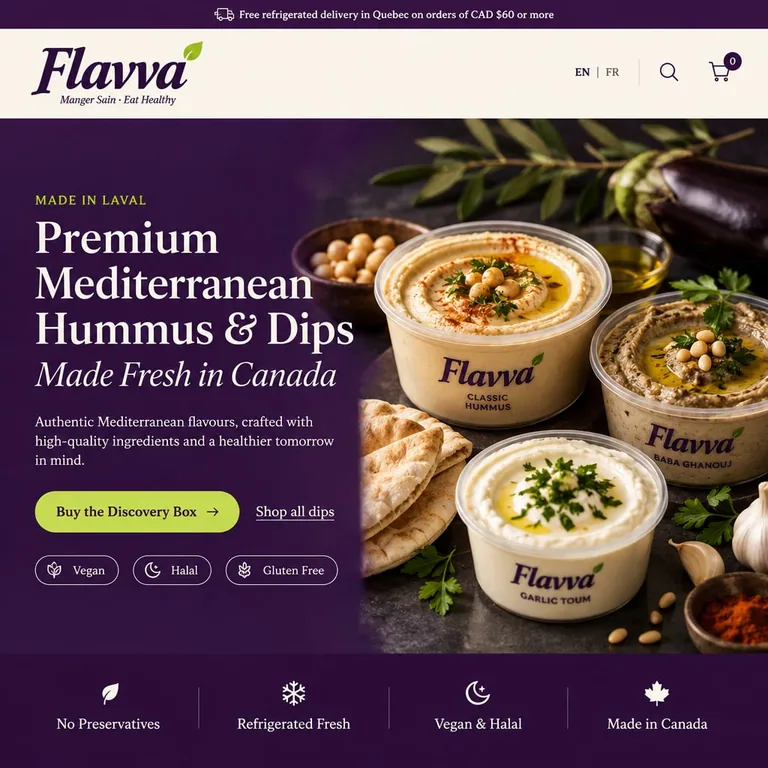
Each connection takes time to build and test. When Flavva's store needed refrigerated delivery rules and a box builder, those features shaped the whole project. You can see how in the Flavva case study.
5. Two or three websites you like
Pick two or three sites, from any industry, and write one line on what you like about each: the photos, how easy it is to find the price, the way the menu works on a phone. That tells a designer more in five minutes than any adjective.
Avoid "I like everything about it". The detail is what helps.
What a good answer to your brief looks like
With this list, quotes become comparable. A developer who has understood it should come back with:
- A short summary of your business and what the site must do.
- The pages and features, listed clearly.
- What you need to provide, and when.
- A timeline with steps: design approval, build, testing and launch.
- The price, the payment schedule and what happens after launch.
If a quote can't show those, ask questions before you pay a deposit. My guide on choosing a web developer has the questions I would ask.
Get a number before the call
If you want a rough idea first, the website cost planner turns your answers into a price range, a timeline and the yearly running costs. A small business website usually starts from about $600, and an online store from about $1,200. You can also see how I work on business websites.
When your list is ready, book a free call and send it to me. I'll tell you honestly what your project needs, and what it doesn't.